
Home Office to Private Executive Suite in Texas
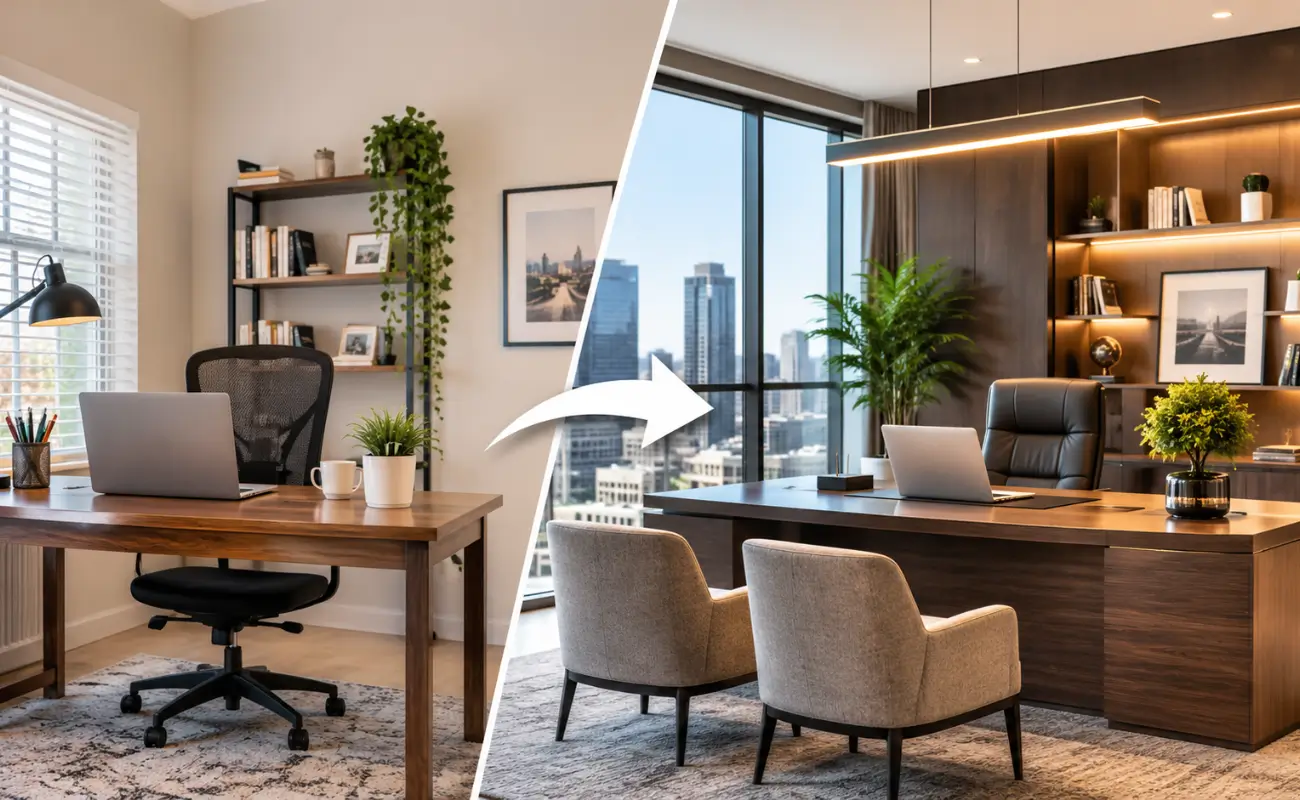
The dog barks during a client call. Your invoices show your home address. A new client asks where they can meet you, and the honest answer is your kitchen table.
Working from home got your business started, but at some point it starts holding it back.
A private executive suite is often the natural next step: a furnished, lockable office of your own, with utilities and internet included in one monthly price, and no long commercial lease.
This step-by-step checklist walks you through the move, from deciding it's time to updating your address and settling into your first week.
Signs It's Time to Move Out of Your Home Office
Not every business needs an office. But if several of these sound familiar, it's probably time:
- You meet clients in coffee shops because your home isn't the right setting.
- Your home address is public, on invoices, your website, or your business listings.
- Family life and work keep colliding, from noise on calls to a dining table that's never cleared.
- You're hiring, or working with contractors who need somewhere to work.
- Your focus is slipping, and the line between work and home has disappeared.
- You're turning down opportunities that need a professional space, like in-person consultations.
If you checked three or more, the rest of this checklist will help you make the move smoothly.
You can also read: Why Renting an Office Space is Better Than Working from Home
Step 1: Define What You Need
Before you look at a single listing, write down what your business actually needs.
This keeps you from overpaying for space you won't use, or signing for something too small.
- Team size: How many people will use the office now, and in 12 months?
- Client meetings: Will clients visit you? How often, and do you need a conference room?
- Privacy: Do you handle confidential conversations or records?
- Hours: Do you work early mornings, evenings, or weekends?
- Equipment: Do you need extra power, storage, or a sink?
- Location: Where do you, your team, and your clients live?
For most solo professionals and small teams, a private executive suite covers all of this without the setup work of a traditional office.
Step 2: Set an All-In Budget
Your home office probably felt free, even though it wasn't. Now you need a clear monthly number for your new office.
The key is to compare options on an all-in basis. A traditional lease is usually quoted per square foot per year, with operating expenses, utilities, internet, furniture, and build-out on top.
A private executive suite is usually one monthly price that includes most of those costs. At Leez A Space, private suites start at $850 per month, all-inclusive.
Also think about taxes. If you've been claiming the home office deduction, the IRS requires that space to be used regularly and exclusively for business.
Moving your main workspace may change what you can claim, so review the IRS home office FAQ and talk to your tax professional before you move.
You can also read: 8 Practical Factors to Consider When Comparing Office Rentals
Step 3: Shortlist Locations
Location affects your commute, your clients' experience, and even who you can hire. To shortlist well:
- Map your people. Mark where you, your team, and your best clients are.
- Check the drive in real time. Look at traffic at 8 a.m. and 5 p.m., not midday.
- Think about parking. Free, close parking makes client visits much easier.
- Consider the address. A recognizable business area adds credibility to your marketing.
Aim for three or four options to tour. You can browse our locations across North Texas and the Austin area to start.
You can also read: Short-Term vs. Long-Term Office Leasing in Texas: What Works Best?
Step 4: Tour and Compare Private Executive Suites
A tour tells you more than any listing. Visit at the time of day you'd actually work, and bring this list:
- Is the office quiet with the door closed?
- How fast is the internet? Run a speed test on your phone.
- Where do clients park, and how do they find your door?
- Is there a conference room, and how is it booked?
- What are the access hours, and how is the building secured?
- Does the office fit your desk, storage, and a chair for visitors?
Take photos and notes at each stop so you can compare them side by side later.
Step 5: Review the Agreement Before You Sign
Office agreements vary a lot, even between suites that look similar. Before you sign, confirm:
- What's included in the monthly price, in writing
- What costs extra, such as meeting room hours, printing, or signage
- The term and notice period, and whether you can go month-to-month
- Renewal pricing and how increases are handled
- How upgrades work if you need a bigger office later
- Permitted use, especially if you see clients or patients
If you're comparing a suite against a traditional lease, review these hidden lease costs first. They're easy to miss in a per-square-foot quote.
You can also read: Move-In Ready Office Spaces at Kings Plaza: Ideal for Your Business
Step 6: Update Your Business Address Everywhere
This is the step most people rush, and it's where problems show up later. Work through each item:
- Texas Secretary of State: If your home is listed as your LLC's or corporation's registered office, you'll need to file a statement of change. See the Secretary of State's Form 401 instructions.
- IRS and state tax accounts: Update your business address with each agency.
- Bank, credit cards, and payment processors
- Business licenses and permits
- Insurance policies
- Vendors, clients, and contracts
- Website, email signature, invoices, and business cards
- Google Business Profile: Google allows a listing for an office that's staffed during business hours and receives customers, according to its Business Profile guidelines. A private office you actually work from qualifies; a mail-only address doesn't.
Keep a simple spreadsheet so you can tick off each update and note the date.
You can also read: Executive Suites in Addison, TX: A Guide for Small Businesses
Step 7: Plan the Move
The good news about a private executive suite is that the hardest parts are already done. The office is furnished, and utilities and internet are set up.
That leaves a short list:
- Pick a move-in date that avoids your busiest week
- Decide what comes from home: monitors, files, personal items
- Arrange access cards or keys for anyone on your team
- Forward your mail and update deliveries
- Test your devices on the office network on day one
For a detailed list of what to pack and set up, use our moving-day checklist.
Step 8: Make Your First Week Count
A new office is a fresh start. Use the first week to set habits that stick:
- Announce the move to clients, with your new address and an invitation to visit.
- Set office hours so clients and your team know when to find you.
- Book your first in-person meetings to make use of the space right away.
- Keep home for home. Resist bringing work back to the kitchen table.
You can also read: Salon Suite Rentals in Texas: What to Check Before Signing
Your Home Office to Private Executive Suite in Texas Checklist
| Step | What to do | When |
|---|---|---|
| 1 | Define team size, meetings, hours, and location needs | 6–8 weeks before |
| 2 | Set an all-in monthly budget and check tax impact | 6–8 weeks before |
| 3 | Shortlist three or four locations | 4–6 weeks before |
| 4 | Tour and compare suites | 4–6 weeks before |
| 5 | Review and sign the agreement | 3–4 weeks before |
| 6 | Update your business address everywhere | 1–2 weeks before and after |
| 7 | Plan and complete the move | Move week |
| 8 | Announce the move and set office routines | First week |
Private Executive Suites at Leez A Space
Leez A Space has spent more than 10 years helping Texas entrepreneurs move from home offices into professional space.
Our private executive suites in Texas are built for exactly this step:
- All-inclusive pricing from $850/month, with no hidden charges
- Furnished, move-in-ready private offices
- Internet, electricity, water, and parking included
- Conference rooms, a mailbox, and break rooms
- Flexible month-to-month terms, so you can grow without a long lease
- 13+ locations across North Texas and the Austin area
Our tenants include consultants, CPAs, insurance agents, realtors, health professionals, and beauty pros who made the same move you're considering.
You can also read: 8 Benefits of Private Executive Suites for Growing Businesses in Texas
Conclusion
Moving from a home office to a private executive suite is one of the clearest signs that your business is growing up.
Take it step by step: define what you need, set an all-in budget, tour a few options, read the agreement, and update your address everywhere before you settle in.
Done right, the move gives you a professional place to meet clients, a clear line between work and home, and room to grow.
Ready to see your next office? Book a tour at the Leez A Space location nearest you, or call 903-776-4350.
Frequently Asked Questions (FAQs)
1. When should I move out of my home office?
Consider moving when your home setup starts limiting the business: you need a professional place to meet clients, family noise interrupts calls, you're hiring your first employee, or you don't want your home address on invoices and listings. If several of these apply, a private office is often worth the cost in focus and credibility.
2. What is a private executive suite?
A private executive suite is a furnished, lockable office you rent inside a professionally managed building. One monthly price typically covers the office, utilities, internet, and building amenities like a break room and parking. It gives small businesses a professional workspace without a long commercial lease or the cost of setting up an empty office.
3. How much does a private executive suite cost?
Prices depend on the city, building, office size, and what's included. Compare quotes as one all-in monthly figure, since some providers charge extra for meeting rooms, printing, or signage. At Leez A Space, private executive suites start at $850 per month, all-inclusive, across locations in North Texas and the Austin area.
4. Do I need to change my business address when I move into an office?
Yes, update it everywhere it appears. In Texas, if your home is your LLC or corporation's registered office, file Form 401 with the Secretary of State to change it. Also update the IRS, your bank, licenses, insurance, website, invoices, and Google Business Profile so customers and agencies have the right address.
5. Can I still claim a home office deduction after renting an office?
It depends on how you use your home. The IRS requires a home office to be used regularly and exclusively for business, often as your principal place of business. Once you rent an office, that may change, so ask your tax professional how the move affects your deductions.